
As an Amazon Associate, this website earns from qualifying purchases.
Giving wedding money involves more than just writing a check; it blends proper etiquette, thoughtful presentation, and a sensible budget. The amount you choose depends on your relationship with the couple, whether you’re attending, and cultural traditions. Creative ways to present cash—like decorative envelopes or small boxes—can make your gift stand out. If you can’t attend, options like remote transfers work well. Still, figuring out how much to give and how to present it can feel tricky, so let’s explore these details further.
Understanding the Proper Etiquette for Giving Wedding Money
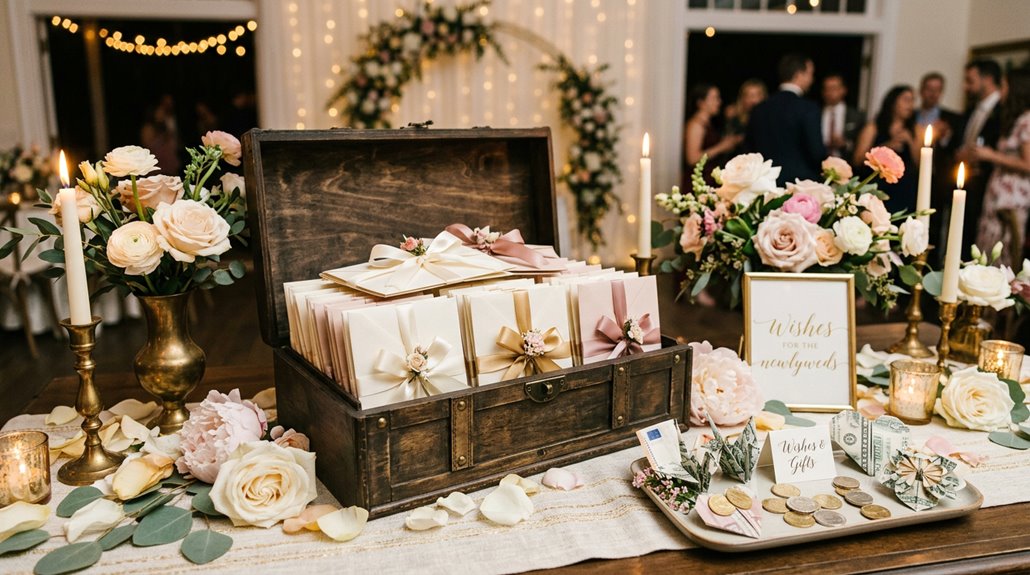
Have you ever wondered what the proper etiquette is when giving money as a wedding gift? Understanding the basics of cash gift etiquette helps ensure your generosity is appreciated and appropriate.
Wedding money guidelines suggest that the amount should reflect your relationship with the couple and whether you’re attending. When not attending, a gift around $50–$100, paired with a thoughtful card, is common. If attending, gifts typically range from $100–$200, with closer friends often giving more.
Presentation ideas matter, too. Cash should be placed inside a card or envelope, ideally handed over during the celebration or left at the venue’s post box if available. Remember, the key is to stay within your budget while expressing warm wishes through a handwritten note, adding a personal touch beyond the money.
How Much Should You Budget for a Wedding Gift?

When deciding how much to budget for a wedding gift, it helps to think about the overall costs associated with attending the celebration. The common guideline is to aim for roughly the cost per guest, often called “cover your plate,” which typically ranges from $100 to $150.
Attendance type influences this. Those attending the full day or bringing a plus-one might consider giving more, while not attending or only going to part of the event suggests a lower gift amount, like $50–$100.
Relationship also matters. Close friends or family may give $150 or more, whereas distant acquaintances might give less. Destination weddings or travel expenses can add up, but guests should still follow gift amount guidelines based on their budget.
| Attendance Type | Suggested Gift Amount |
|---|---|
| Full day attendance | $100–$150 |
| Partial attendance | $50–$100 |
| Not attending | Consider a card or smaller gift |
| Bringing a plus-one | Slightly higher than individual |
| Close family or friends | $150 or more |
Creative Ways to Present Cash as a Thoughtful Gift
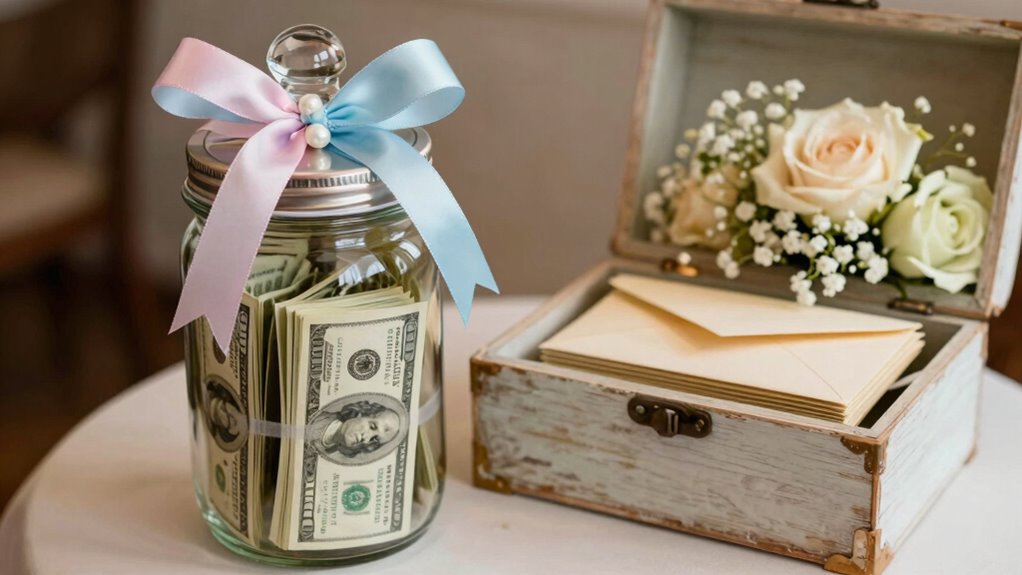
Ever wondered how to make giving a cash gift feel more personal and special? Creative ways to present cash as a thoughtful gift can turn simple money into a memorable gesture.
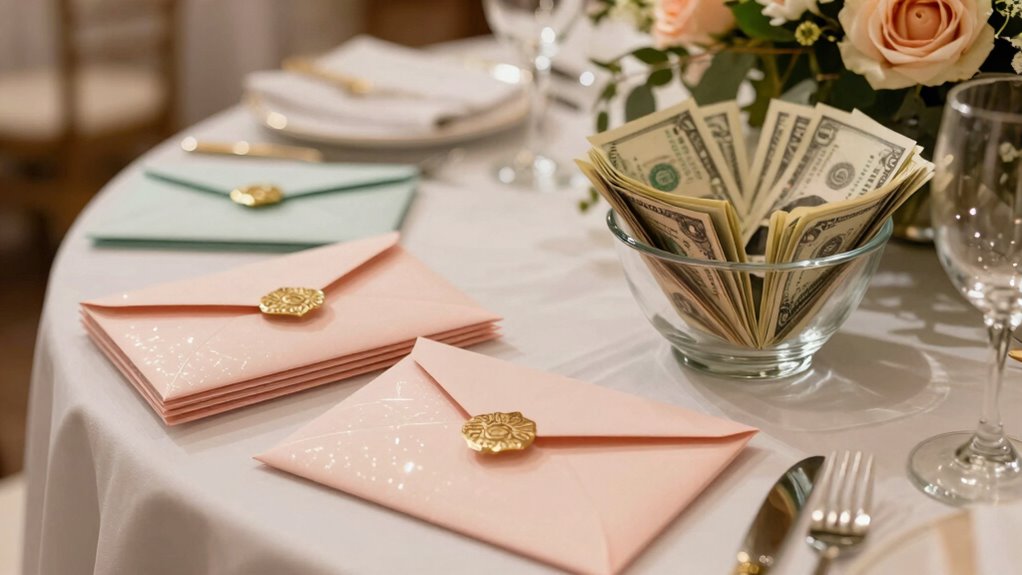
Gifting money ideas for weddings include presenting a cash gift in a beautifully decorated envelope suited to cultural traditions, like ornate Asian-style designs or elegant Italian purses. For added charm, place the cash in a decorative box or small purse, making it more than just a plain envelope.
If the couple isn’t attending in person, consider mailing a check or money order ahead of time to ensure safe delivery. Pair the cash with a small, meaningful token, such as a favorite book or gift card, to give the gift a tangible touch. These thoughtful presentation ideas show care beyond just the amount.
Factors That Influence Your Gift Amount (Relationship, Tradition, and Event Type)
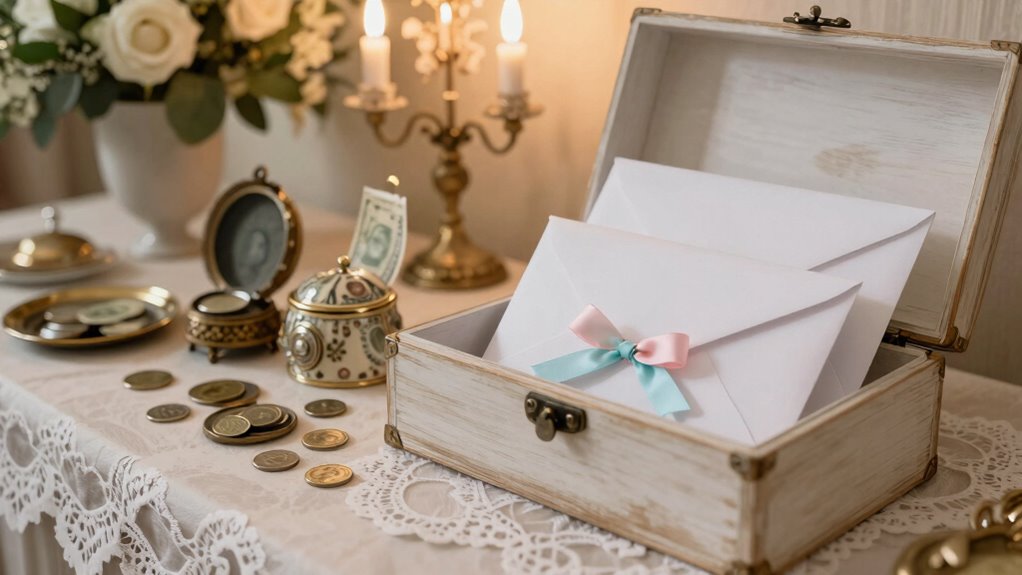
The amount of money given as a wedding gift can vary widely based on several important factors. Closer relationships, like siblings or parents, usually warrant higher gifts, often $150 or more, because they’re more involved in the couple’s lives. Distant relatives or coworkers might give between $50 and $100, reflecting a respectful gesture without overspending.
Attending the full wedding day, rather than just the evening reception, often suggests a higher contribution. Plus-one guests typically increase the gift amount to cover an extra plate or guest. Destination weddings can influence gift size, as travelers might give a smaller amount since travel costs are higher.
Ultimately, gift amounts should match the giver’s budget and relationship, emphasizing thoughtfulness over strict rules.
Tips for Sending Money When You Can’t Attend the Wedding
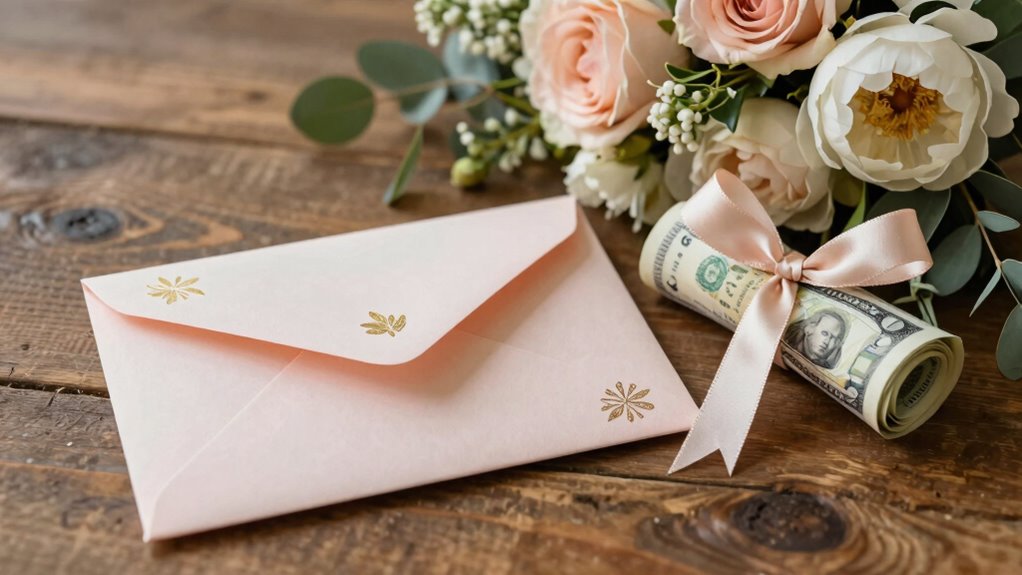
Sending money for a wedding you can’t attend might seem tricky, but it’s quite manageable with the right approach. A secure method, like a trusted money transfer, mailed check, or gift card, assures your gift arrives safely without the need to carry cash while traveling. It’s thoughtful to include a handwritten note explaining the gift’s purpose, such as contributing to the honeymoon or new home.
To avoid mishaps, consider sending your gift ahead of the wedding date, giving plenty of time for delivery. When choosing how to send your gift, follow the couple’s preferred method, whether through their registry or cash. If you’re out of state, double-check the recipient’s details and opt for tracking or confirmation to guarantee your thoughtful gift reaches the happy couple without confusion.
Common Questions About Gifting Money at Weddings

Questions often arise about the best way to give money at weddings, especially when it comes to showing thoughtfulness and etiquette. Many wonder about the right amount, presentation, and timing.
- When not attending, a typical cash gift ranges from $50 to $100, with an average of around $75, offering flexibility for different budgets.
- Attending the wedding usually calls for $100 to $200, but closer relationships might mean giving more.
The gift should be paired with a heartfelt card or note and given on or near the wedding day to be most meaningful. Most importantly, the amount should reflect the giver’s budget and relationship with the couple, avoiding any financial strain. Thoughtfulness often counts more than the sum.